
The healthcare industry is evolving rapidly, driven by the need for better patient care, operational efficiency, data security, and accessible medical services. Technology plays a vital role in helping hospitals, clinics, diagnostic laboratories, healthcare startups, and medical organizations meet these demands. Our healthcare technology solutions help medical professionals streamline operations, improve patient experiences, and build a connected healthcare ecosystem.
We combine modern software development, artificial intelligence, automation, cloud computing, and data analytics to create reliable digital solutions tailored to the unique needs of healthcare organizations. From patient management systems to telemedicine platforms, our technology helps healthcare providers deliver efficient, secure, and patient-focused services.
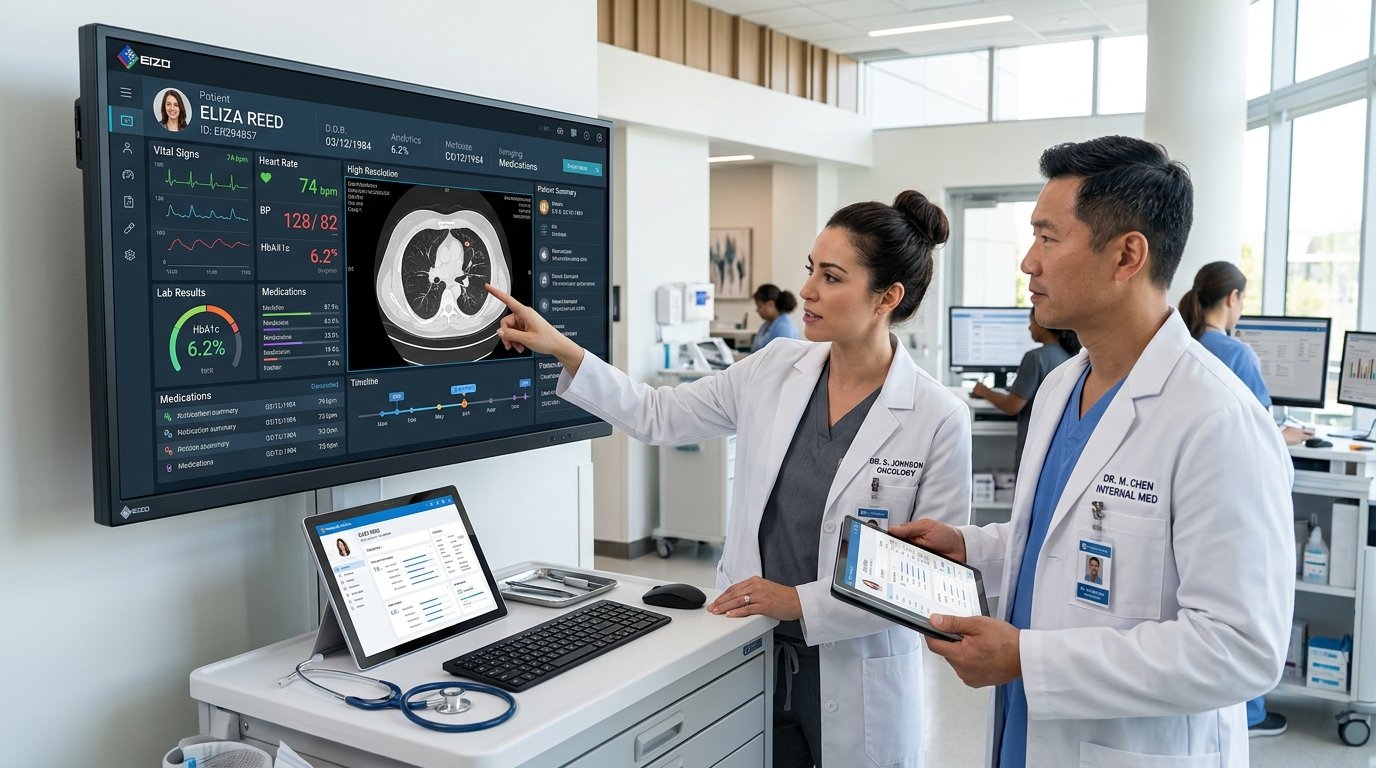
Comprehensive Healthcare Software Development
Every healthcare organization has different operational requirements. Our healthcare software development services are designed to address these challenges through customized digital platforms that simplify everyday processes and support long-term growth.
We develop solutions that connect patients, healthcare professionals, administrators, and other stakeholders within a unified digital environment. By reducing manual work and improving information accessibility, our systems help healthcare organizations manage their resources more effectively.
Our solutions can include hospital management systems, electronic health record integrations, appointment scheduling platforms, patient portals, laboratory management software, and healthcare CRM systems. Each solution is designed with usability, scalability, and data protection in mind.
Hospital Management Systems
Managing a hospital involves coordinating multiple departments, medical professionals, appointments, billing processes, and patient records. Without integrated systems, these activities can become time-consuming and difficult to manage.
Our hospital management technology helps centralize essential administrative and operational processes. Healthcare organizations can manage appointments, patient registration, billing, staff schedules, inventory, and reporting through connected digital workflows.
Automated processes help reduce repetitive administrative tasks and minimize avoidable errors. Administrators gain better visibility into daily operations, while healthcare professionals can access relevant information more efficiently.
The result is a more organized operational environment that allows medical teams to focus more of their time and attention on patient care.
Electronic Health Records and Patient Management
Accurate patient information is essential for effective healthcare delivery. Digital health record systems help authorized healthcare professionals access relevant medical information, treatment histories, prescriptions, and diagnostic reports when needed.
We build and integrate patient management solutions that support organized recordkeeping and efficient information exchange. Depending on the organization’s requirements, these systems can connect with existing hospital software, laboratory platforms, and other healthcare applications.
Our approach emphasizes access controls, secure data handling, auditability, and interoperability. These capabilities help organizations manage sensitive information responsibly while improving coordination between departments.
Telemedicine and Remote Healthcare Solutions
Patients increasingly expect convenient ways to consult healthcare professionals without always visiting a physical facility. Telemedicine technology makes remote consultations and digital healthcare services more accessible.
We develop telemedicine platforms that can include video consultations, appointment booking, digital prescriptions, patient dashboards, notifications, and online payment integrations.
These solutions help healthcare providers extend their services beyond physical locations and offer greater flexibility to patients. Remote consultation platforms can be particularly useful for follow-up appointments, specialist consultations, and patients who face geographical or mobility-related barriers.
Appropriate clinical workflows, privacy safeguards, and applicable healthcare regulations remain essential to delivering safe and reliable telemedicine services.
AI-Powered Healthcare and Intelligent Automation
Artificial intelligence and automation are creating new opportunities to improve healthcare administration and support clinical workflows.
Our AI-enabled healthcare solutions can help automate appointment reminders, classify incoming support requests, summarize administrative information, and assist with document processing. Predictive analytics can also help organizations identify operational patterns, forecast resource requirements, and improve planning.
Where appropriate, AI tools can support medical research, clinical documentation, and decision-support workflows under qualified professional oversight. They should complement, rather than replace, clinical judgment.
We focus on practical applications that solve real operational challenges, with appropriate human review, data governance, and validation for the intended use.
Healthcare Data Analytics and Reporting
Healthcare organizations generate substantial amounts of operational and clinical data. When analyzed responsibly, this information can help decision-makers understand performance, identify bottlenecks, and allocate resources more effectively.
Our healthcare analytics solutions transform relevant data into clear dashboards and actionable reports. Organizations can monitor appointment volumes, patient service trends, resource utilization, billing performance, and other operational indicators.
Data analytics can also help identify recurring administrative inefficiencies and support evidence-based planning. Access to reliable reporting enables management teams to make more informed decisions while maintaining appropriate privacy protections.
Healthcare Cybersecurity and Data Protection
Healthcare data requires strong protection because it contains sensitive personal and medical information. A security incident can disrupt operations, compromise privacy, and damage patient trust.
We incorporate security-conscious practices into healthcare technology projects, including role-based access controls, secure authentication, encryption where appropriate, audit logs, backup strategies, and vulnerability management.
Our solutions can be designed to support relevant data protection obligations and healthcare regulations based on the organization’s location, activities, and applicable legal requirements.
Security is an ongoing process rather than a one-time implementation. Regular reviews, updates, staff awareness, and incident response planning are important parts of maintaining a resilient digital healthcare environment.
Integration, Scalability, and Digital Transformation
Healthcare organizations often rely on multiple software applications. Connecting these systems can reduce data duplication and improve information flow between departments.
We help organizations evaluate integration opportunities involving existing hospital systems, laboratory applications, pharmacy software, billing platforms, and third-party healthcare services. Where suitable, standardized healthcare data exchange formats and APIs can support interoperability.
Our solutions are built around business requirements and future growth. Whether an organization is digitizing its first major workflow or modernizing an established healthcare platform, we prioritize maintainability, scalability, and a practical implementation roadmap.